
'%3e%3cpath%20d='M7.31055%200C11.3483%200%2014.6227%203.27289%2014.623%207.31055C14.623%209.0259%2014.0303%2010.6024%2013.041%2011.8496L15.7549%2014.5625C16.0837%2014.8913%2016.0837%2015.4241%2015.7549%2015.7529C15.4261%2016.0817%2014.8933%2016.0817%2014.5645%2015.7529L11.8516%2013.0391C10.604%2014.0293%209.02689%2014.623%207.31055%2014.623C3.27289%2014.6227%200%2011.3483%200%207.31055C0.000300342%203.27308%203.27308%200.000300342%207.31055%200ZM7.31055%201.68359C4.20324%201.68389%201.68389%204.20324%201.68359%207.31055C1.68359%2010.4181%204.20305%2012.9372%207.31055%2012.9375C10.4183%2012.9375%2012.9375%2010.4183%2012.9375%207.31055C12.9372%204.20305%2010.4181%201.68359%207.31055%201.68359Z'%20fill='%23D9D9D9'/%3e%3c/g%3e%3cdefs%3e%3cclipPath%20id='clip0_0_2110'%3e%3crect%20width='16'%20height='16'%20fill='white'/%3e%3c/clipPath%3e%3c/defs%3e%3c/svg%3e)

'%3e%3ccircle%20cx='8'%20cy='8'%20r='8'%20fill='%23313131'/%3e%3cpath%20d='M7.59985%203.19995C8.04162%203.19995%208.39955%203.55802%208.39966%203.99976V8.34253L10.7844%209.71948C11.167%209.94041%2011.2973%2010.4306%2011.0764%2010.8132C10.8554%2011.1954%2010.3661%2011.326%209.98364%2011.1052L7.21313%209.50562C7.14844%209.46826%207.09109%209.42271%207.04126%209.37183C7.03714%209.3678%207.03357%209.36324%207.02954%209.35913C7.00625%209.33429%206.98478%209.30827%206.96509%209.28101C6.86323%209.14677%206.80005%208.98107%206.80005%208.79956V3.99976C6.80015%203.55808%207.15818%203.20006%207.59985%203.19995Z'%20fill='white'%20fill-opacity='0.7'/%3e%3c/g%3e%3cdefs%3e%3cclipPath%20id='clip0_3_1208'%3e%3crect%20width='16'%20height='16'%20fill='white'/%3e%3c/clipPath%3e%3c/defs%3e%3c/svg%3e)
'%3e%3cmask%20id='mask0_108_4890'%20style='mask-type:luminance'%20maskUnits='userSpaceOnUse'%20x='0'%20y='0'%20width='108'%20height='108'%3e%3ccircle%20cx='54'%20cy='54'%20r='54'%20fill='white'/%3e%3c/mask%3e%3cg%20mask='url(%23mask0_108_4890)'%3e%3ccircle%20cx='54'%20cy='54'%20r='54'%20fill='%231A1A1A'/%3e%3cpath%20d='M54%2069C77.196%2069%2096%2087.804%2096%20111C96%20134.196%2077.196%20153%2054%20153C30.804%20153%2012%20134.196%2012%20111C12%2087.804%2030.804%2069%2054%2069ZM54%2018C65.598%2018%2075%2027.402%2075%2039C75%2050.598%2065.598%2060%2054%2060C42.402%2060%2033%2050.598%2033%2039C33%2027.402%2042.402%2018%2054%2018Z'%20fill='%23313131'/%3e%3ccircle%20cx='54'%20cy='54'%20r='53.25'%20stroke='%23323232'%20stroke-width='1.5'/%3e%3c/g%3e%3c/g%3e%3cdefs%3e%3cclipPath%20id='clip0_108_4890'%3e%3crect%20width='54'%20height='54'%20fill='white'%20transform='scale(2)'/%3e%3c/clipPath%3e%3c/defs%3e%3c/svg%3e)


Overview of The Hunt
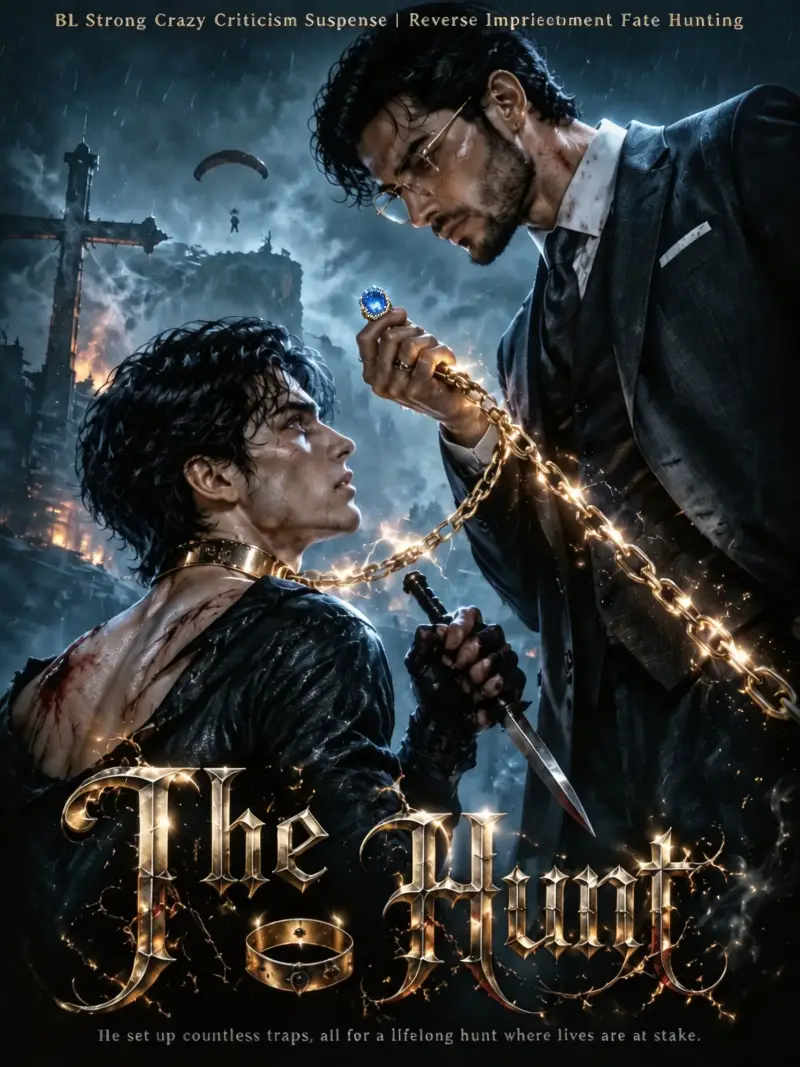
The Hunt is a dark, suspense-driven short drama built around a deadly emotional paradox: what if the cage that feels like imprisonment is also the only thing keeping someone alive? At the center of the story is Asher, a top hitman whose life has been shaped by blood, secrecy, and survival. He is used to being the hunter, the one who moves first, strikes hard, and disappears before anyone can control him. That certainty collapses when he becomes entangled with Julian, an untouchable mastermind whose power is not simply physical, but psychological. Julian does not merely capture Asher; he studies him, contains him, and draws him into a golden cage that blurs the line between protection and possession.
What makes The Hunt compelling is not only its danger, but its intimacy. The premise begins like a lethal game of dominance, yet the tension gradually shifts into something more complicated and disturbing. Asher wants freedom, but he is also pulled toward the person who seems to understand him most completely. Julian appears to be the captor, the manipulator, the architect of the trap. Yet the revelation that the sinister trap may have been designed to save Asher’s life reframes the entire relationship. The Hunt uses romance, mystery, and psychological suspense to ask whether surrender can ever be chosen freely when survival itself is at stake.
Asher’s Character Study: A Hitman Trapped Between Instinct and Longing
Asher’s role in The Hunt is fascinating because he is introduced as someone who should be almost impossible to overpower. A deadly hitman survives by keeping distance, reading threats before they form, and refusing to let emotion interfere with instinct. His identity depends on control. That is why Julian’s captivity is so destabilizing: it does not simply restrain Asher’s body, but challenges the image he has built of himself. Inside Julian’s golden cage, Asher is forced to confront the terrifying possibility that his sharpest instincts have led him into a trap he cannot outthink.
His fight for freedom is not only physical. It is emotional and existential. Asher wants to escape Julian’s influence because escape means proving he is still his own person. Yet The Hunt complicates that desire by showing how fixation can grow in the same space as resistance. Asher is drawn toward Julian not because he becomes weak, but because Julian represents the one force capable of matching him. Their bond is charged by danger, but also by recognition. Asher has likely spent his life being feared, hired, used, or hunted; Julian sees through the weaponized surface and understands the survivor beneath it.
This is where The Hunt becomes more than a captor-and-captive story. Asher’s vulnerability does not erase his lethality. Instead, it reveals the cost of living as someone who must always be ready to kill or be killed. His attraction to Julian feels dangerous precisely because it threatens the emotional armor that once kept him alive.
Julian’s Golden Cage: Protection, Possession, and the Mind of a Mastermind
Julian is described as an untouchable mastermind, and The Hunt uses that idea to build a character whose power lies in anticipation. He is not simply a villain standing behind locked doors. He is a strategist who understands movement, weakness, timing, and desire. His control over Asher’s world is what makes the golden cage so unsettling. It suggests wealth, beauty, and comfort, but also surveillance, ownership, and a lack of true choice. Julian’s prison is not crude; it is elegant. That elegance makes it more dangerous.
The central mystery of Julian is motive. At first, his actions appear rooted in dominance. He captures a lethal man, bends the situation to his will, and turns Asher’s life into a game whose rules only he seems to know. But The Hunt slowly shifts the audience’s suspicion. If Julian’s trap was meant to save Asher’s life, then his cruelty may be bound to a hidden logic. That does not make his control harmless, and the drama is smart enough not to excuse the fear and manipulation embedded in the situation. Instead, it creates a moral tension: can protection become a form of violence when the person being protected is denied the truth?
Julian’s fixation on Asher is equally layered. He may be drawn to Asher’s deadliness, his resistance, or the part of him that refuses to surrender even when cornered. In The Hunt, Julian’s danger comes from the fact that he can read people, but his feelings for Asher threaten to make him readable too. The mastermind’s greatest risk is not failure; it is attachment.
The Sinister Trap Revealed: Why Captivity Becomes the Central Twist
The key turning point in The Hunt is the shift from a lethal game of dominance to the discovery that Julian’s sinister trap was never only about control. This reveal changes the emotional geometry of the drama. Before that moment, Asher’s captivity can be read as a straightforward nightmare: a hitman captured by someone powerful enough to contain him. After it, every earlier gesture becomes ambiguous. Was Julian testing Asher, tormenting him, shielding him, or all three at once? The answer matters because The Hunt thrives on the discomfort of mixed motives.
The phrase “bound by blood and secrets” suggests a world where danger is inherited through past actions, hidden alliances, and the consequences of violence. Asher’s profession already places him close to death, but the story implies that something larger is closing in around him. Julian’s cage may be golden because it is built from privilege and control, but it may also be golden because it is the rare place where Asher cannot be reached by enemies he does not yet see. That irony gives the drama its most haunting tension: freedom may lead Asher directly into danger, while captivity may be the reason he survives.
This turning point also deepens the romance. If Julian is saving Asher, he is doing so in a way that violates Asher’s autonomy. If Asher begins to understand Julian’s motives, he must still decide whether intention can outweigh imprisonment. The Hunt does not reduce that dilemma to a simple answer. It lets the audience sit inside Asher’s confusion, where betrayal, gratitude, anger, and desire all exist at once.
Themes of Desire and Control in The Hunt
The Hunt is most powerful when it treats love as a moral dilemma rather than an easy rescue. Asher’s attraction to Julian is dangerous because it grows in a context where power is uneven. Julian has information, resources, and control over the cage. Asher has skill, rage, and a fierce need to reclaim himself. Their relationship asks a difficult question: can love survive when one person’s protection feels like another person’s imprisonment? The answer is intentionally unstable, and that instability is what gives the drama its psychological charge.
The title The Hunt works on several levels. Asher may be a professional hunter by trade, but he becomes the hunted inside Julian’s design. Julian may appear to be the predator, yet his need to keep Asher alive suggests he is also chasing something more fragile than victory. The hunt is for survival, for truth, and for the version of intimacy that can exist after secrets have done damage. Every emotional advance feels like a risk because surrender could mean trust, but it could also mean losing the last boundary Asher has left.
Cinematically, The Hunt invites a style built on contrast: luxury against danger, silence against violence, closeness against suspicion. The golden cage is not just a setting; it is a visual metaphor for seductive confinement. Viewers drawn to dark romance, psychological suspense, and morally gray power dynamics will find The Hunt especially gripping because it refuses to make desire clean or simple. Its drama lives in the question of whether being saved is still salvation when the rescuer never asked permission.
Bạn đã sẵn sàng tự mình trải nghiệm chưa? Xem The Hunt ngay bây giờ - tất cả các tập đều có sẵn.
Xem ngay