
'%3e%3cpath%20d='M7.31055%200C11.3483%200%2014.6227%203.27289%2014.623%207.31055C14.623%209.0259%2014.0303%2010.6024%2013.041%2011.8496L15.7549%2014.5625C16.0837%2014.8913%2016.0837%2015.4241%2015.7549%2015.7529C15.4261%2016.0817%2014.8933%2016.0817%2014.5645%2015.7529L11.8516%2013.0391C10.604%2014.0293%209.02689%2014.623%207.31055%2014.623C3.27289%2014.6227%200%2011.3483%200%207.31055C0.000300342%203.27308%203.27308%200.000300342%207.31055%200ZM7.31055%201.68359C4.20324%201.68389%201.68389%204.20324%201.68359%207.31055C1.68359%2010.4181%204.20305%2012.9372%207.31055%2012.9375C10.4183%2012.9375%2012.9375%2010.4183%2012.9375%207.31055C12.9372%204.20305%2010.4181%201.68359%207.31055%201.68359Z'%20fill='%23D9D9D9'/%3e%3c/g%3e%3cdefs%3e%3cclipPath%20id='clip0_0_2110'%3e%3crect%20width='16'%20height='16'%20fill='white'/%3e%3c/clipPath%3e%3c/defs%3e%3c/svg%3e)

'%3e%3ccircle%20cx='8'%20cy='8'%20r='8'%20fill='%23313131'/%3e%3cpath%20d='M7.59985%203.19995C8.04162%203.19995%208.39955%203.55802%208.39966%203.99976V8.34253L10.7844%209.71948C11.167%209.94041%2011.2973%2010.4306%2011.0764%2010.8132C10.8554%2011.1954%2010.3661%2011.326%209.98364%2011.1052L7.21313%209.50562C7.14844%209.46826%207.09109%209.42271%207.04126%209.37183C7.03714%209.3678%207.03357%209.36324%207.02954%209.35913C7.00625%209.33429%206.98478%209.30827%206.96509%209.28101C6.86323%209.14677%206.80005%208.98107%206.80005%208.79956V3.99976C6.80015%203.55808%207.15818%203.20006%207.59985%203.19995Z'%20fill='white'%20fill-opacity='0.7'/%3e%3c/g%3e%3cdefs%3e%3cclipPath%20id='clip0_3_1208'%3e%3crect%20width='16'%20height='16'%20fill='white'/%3e%3c/clipPath%3e%3c/defs%3e%3c/svg%3e)
'%3e%3cmask%20id='mask0_108_4890'%20style='mask-type:luminance'%20maskUnits='userSpaceOnUse'%20x='0'%20y='0'%20width='108'%20height='108'%3e%3ccircle%20cx='54'%20cy='54'%20r='54'%20fill='white'/%3e%3c/mask%3e%3cg%20mask='url(%23mask0_108_4890)'%3e%3ccircle%20cx='54'%20cy='54'%20r='54'%20fill='%231A1A1A'/%3e%3cpath%20d='M54%2069C77.196%2069%2096%2087.804%2096%20111C96%20134.196%2077.196%20153%2054%20153C30.804%20153%2012%20134.196%2012%20111C12%2087.804%2030.804%2069%2054%2069ZM54%2018C65.598%2018%2075%2027.402%2075%2039C75%2050.598%2065.598%2060%2054%2060C42.402%2060%2033%2050.598%2033%2039C33%2027.402%2042.402%2018%2054%2018Z'%20fill='%23313131'/%3e%3ccircle%20cx='54'%20cy='54'%20r='53.25'%20stroke='%23323232'%20stroke-width='1.5'/%3e%3c/g%3e%3c/g%3e%3cdefs%3e%3cclipPath%20id='clip0_108_4890'%3e%3crect%20width='54'%20height='54'%20fill='white'%20transform='scale(2)'/%3e%3c/clipPath%3e%3c/defs%3e%3c/svg%3e)


Overview of Blood of the Archenemy
Blood of the Archenemy enters the vampire genre through a tense, emotionally charged premise: a world under siege, an elite hunter trained to destroy the darkness, and a high-born vampire whose presence threatens every rule the hero has lived by. At the center is Kai, a monster-slayer who infiltrates an academy with a clear mission—to purge the vampire threat hiding behind privilege, secrecy, and power. What he does not expect is Leo, his charming and enigmatic roommate, whose scent awakens not only suspicion but a dangerous obsession Kai cannot easily explain.
The drama’s hook lies in that collision between duty and desire. Blood of the Archenemy is not simply about hunters versus vampires; it is about what happens when the enemy becomes intimate, familiar, and impossible to separate from one’s own survival. The golden thread that links Kai and Leo’s lives transforms their rivalry into something far more lethal. If one is harmed, the other may suffer. If one lies, the other may still feel the truth pulling beneath the surface.
For viewers drawn to supernatural romance, academy intrigue, and morally complex fantasy, Blood of the Archenemy offers a story built on distrust, temptation, and the terrifying possibility that salvation may arrive in the form of the one person Kai was taught to kill.
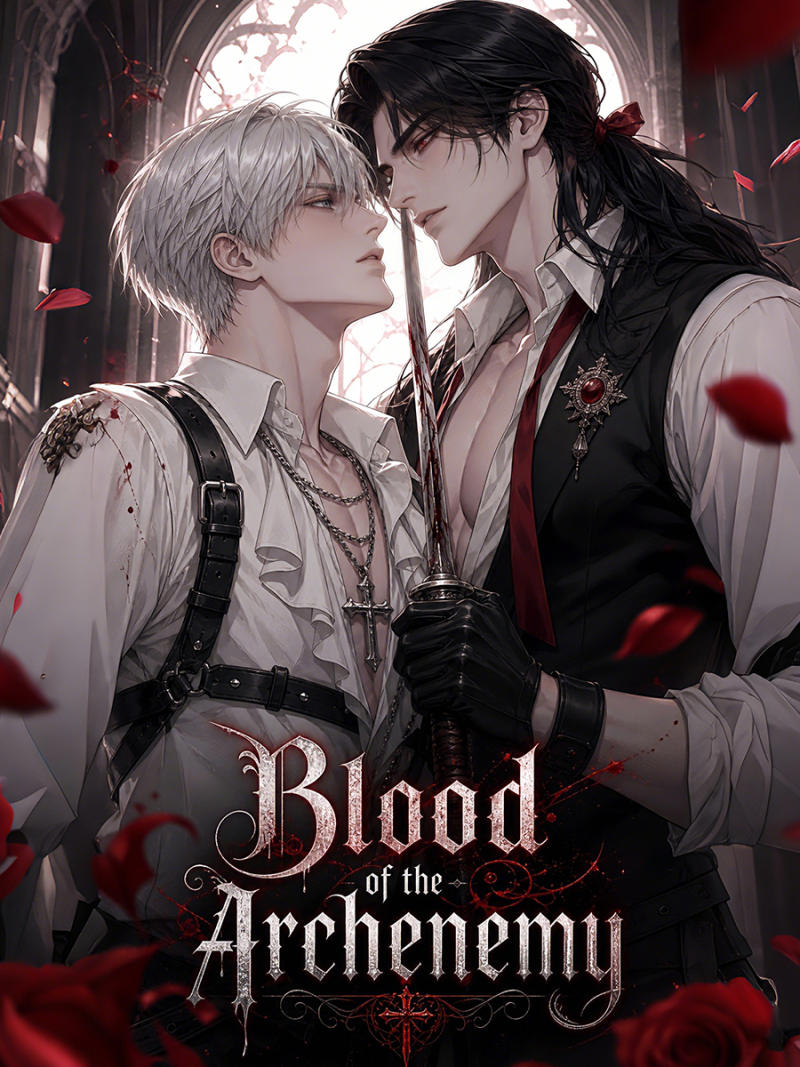
Kai and Leo: Character Study of Enemies Bound by Desire
Kai’s character is defined by discipline before anything else. As an elite hunter, he carries the weight of a world at war with bloodthirsty vampires, and his mission at the academy is not casual investigation but calculated infiltration. He arrives with purpose, training, and a moral framework shaped by survival: vampires are the enemy, high-born vampires are especially dangerous, and hesitation can get people killed. That certainty makes Kai compelling, because Blood of the Archenemy immediately places him in a situation where certainty becomes unreliable.
Leo functions as Kai’s perfect contradiction. He is charming, enigmatic, and close enough to disarm him because they share the intimate space of roommates. The danger of Leo is not only that he may be a high-born vampire connected to the darkness Kai seeks to purge; it is that he does not fit neatly into the monster image Kai expects. His scent ignites forbidden obsession, suggesting an attraction that feels instinctive, physical, and possibly supernatural. This detail gives their dynamic a charged ambiguity: is Kai responding to real emotion, predatory manipulation, or the first sign of the bond tightening around them?
The phrase “from rival hunters to star-crossed lovers” captures the emotional engine of Blood of the Archenemy. Rivalry gives the story its spark, but the possibility of love gives it risk. Kai cannot trust Leo without betraying his mission, yet he cannot dismiss Leo without denying the strange connection growing between them. Leo, in turn, remains fascinating because the story presents him through layers of charm and secrecy rather than simple confession. Together, Kai and Leo create the drama’s central tension: two figures trained or born into opposing sides, forced to question whether identity is destiny.
The Golden Thread: Moral Dilemma of a Lethal Supernatural Bond
The golden thread is one of the most important fantasy devices in Blood of the Archenemy because it changes the meaning of conflict. In a standard hunter-and-vampire story, Kai might defeat Leo, expose him, or escape him. Here, the “bond” links their very lives, turning violence into self-endangerment and hatred into dependency. It is described as lethal, which means the connection is not merely romantic symbolism. It has consequences. It makes every choice sharper, because Kai’s enemy may also be the person whose survival protects his own.
This bond introduces a powerful moral dilemma. If Kai believes Leo belongs to the high-born darkness he has sworn to destroy, does the bond weaken his duty or reveal a truth his training has hidden from him? If Leo is dangerous, saving him could threaten others. If Leo is misunderstood, killing him would make Kai a weapon of prejudice rather than justice. Blood of the Archenemy uses this uncertainty to complicate the usual fantasy divide between monster and hero.
The forbidden obsession triggered by Leo’s scent deepens that dilemma. Scent in vampire fiction often suggests instinct, blood, hunger, or mate-like recognition, and here it becomes a sign that Kai’s body may understand something his mind rejects. Yet the drama wisely leaves room for unease. Obsession is not the same as trust. A bond is not the same as consent. Fate is not automatically love. That tension makes the emotional stakes feel more mature than a simple supernatural romance.
In Blood of the Archenemy, the golden thread asks whether two people can choose each other freely when destiny, biology, war, and secrecy are all pulling at once. The answer is not easy, and that difficulty is precisely what makes the premise so addictive.
Academy Conspiracy and the Turning Point from Rivalry to Alliance
The academy setting gives Blood of the Archenemy a strong sense of contained danger. An academy is supposed to be a place of training, hierarchy, and controlled knowledge, but in this story it becomes a battlefield disguised as an institution. Kai infiltrates it to purge high-born darkness, which suggests that the threat is not roaming openly in the streets alone. It may be embedded in systems, protected by status, and hidden among students or elites who know how to appear untouchable.
This is where the shadowy conspiracy becomes essential. The long description points to Kai and Leo hunting it together, and that shift is a major turning point in the drama’s emotional structure. When enemies investigate the same darkness, their relationship can no longer remain a simple chase. Cooperation forces observation. Observation creates doubt. Doubt opens the door to empathy, even when neither character is ready to name it.
The academy also intensifies the roommate dynamic. Kai and Leo are not distant opponents meeting only in battle; they occupy the same daily world. Every glance, silence, and withheld truth matters because privacy is limited. Leo’s charm becomes harder to dismiss when Kai sees him outside the expected frame of an enemy. Kai’s suspicion becomes harder to hide when the bond and obsession keep drawing his attention back to Leo. Blood of the Archenemy turns proximity into pressure, using shared space as a slow-burning fuse.
The conspiracy plot prevents the romance from becoming isolated from the larger world. Their attraction matters, but so does the war around them. If vampires are besieging humanity and high-born darkness is involved, then Kai’s personal feelings carry public consequences. Trusting Leo is not just a romantic risk; it may alter the direction of the hunt itself.
Ending Questions and Gothic Themes in Blood of the Archenemy
Blood of the Archenemy stands out because it combines gothic fantasy with the emotional grammar of star-crossed romance. The vampires are not only creatures of horror; they represent lineage, temptation, social power, and the fear of contamination. Kai’s role as a hunter brings in the language of duty and purification, while Leo’s high-born mystery complicates the idea that evil can be recognized by blood alone. The title itself suggests inherited hatred: an archenemy is not a casual opponent but the figure a hero is meant to oppose absolutely.
The drama’s cinematic appeal likely rests in contrasts. A besieged world creates darkness and urgency, while the golden thread offers a striking visual metaphor for fate. The academy setting allows for candlelit secrecy, charged corridors, hidden rooms, and the constant feeling that someone is watching. Even without relying on explicit spectacle, Blood of the Archenemy has a naturally visual premise: two enemies bound by a shining line that may be beautiful, deadly, or both.
The ending question at the heart of the story is not simply whether Kai and Leo survive. It is whether Kai can redefine salvation without abandoning justice. If Leo is his greatest enemy, then desire is a trap. If Leo is his only salvation, then the war has been built on a truth Kai does not yet understand. The best tension in Blood of the Archenemy comes from refusing to make that choice too simple.
For viewers searching for a vampire short drama with forbidden love, supernatural bonding, academy secrets, and a morally conflicted hunter, Blood of the Archenemy is shaped around one irresistible question: when fate ties you to the monster you were born to kill, do you cut the thread—or follow it?
Ready to experience it yourself? Stream Blood of the Archenemy now - all episodes available.
Watch now