
'%3e%3cpath%20d='M7.31055%200C11.3483%200%2014.6227%203.27289%2014.623%207.31055C14.623%209.0259%2014.0303%2010.6024%2013.041%2011.8496L15.7549%2014.5625C16.0837%2014.8913%2016.0837%2015.4241%2015.7549%2015.7529C15.4261%2016.0817%2014.8933%2016.0817%2014.5645%2015.7529L11.8516%2013.0391C10.604%2014.0293%209.02689%2014.623%207.31055%2014.623C3.27289%2014.6227%200%2011.3483%200%207.31055C0.000300342%203.27308%203.27308%200.000300342%207.31055%200ZM7.31055%201.68359C4.20324%201.68389%201.68389%204.20324%201.68359%207.31055C1.68359%2010.4181%204.20305%2012.9372%207.31055%2012.9375C10.4183%2012.9375%2012.9375%2010.4183%2012.9375%207.31055C12.9372%204.20305%2010.4181%201.68359%207.31055%201.68359Z'%20fill='%23D9D9D9'/%3e%3c/g%3e%3cdefs%3e%3cclipPath%20id='clip0_0_2110'%3e%3crect%20width='16'%20height='16'%20fill='white'/%3e%3c/clipPath%3e%3c/defs%3e%3c/svg%3e)

'%3e%3ccircle%20cx='8'%20cy='8'%20r='8'%20fill='%23313131'/%3e%3cpath%20d='M7.59985%203.19995C8.04162%203.19995%208.39955%203.55802%208.39966%203.99976V8.34253L10.7844%209.71948C11.167%209.94041%2011.2973%2010.4306%2011.0764%2010.8132C10.8554%2011.1954%2010.3661%2011.326%209.98364%2011.1052L7.21313%209.50562C7.14844%209.46826%207.09109%209.42271%207.04126%209.37183C7.03714%209.3678%207.03357%209.36324%207.02954%209.35913C7.00625%209.33429%206.98478%209.30827%206.96509%209.28101C6.86323%209.14677%206.80005%208.98107%206.80005%208.79956V3.99976C6.80015%203.55808%207.15818%203.20006%207.59985%203.19995Z'%20fill='white'%20fill-opacity='0.7'/%3e%3c/g%3e%3cdefs%3e%3cclipPath%20id='clip0_3_1208'%3e%3crect%20width='16'%20height='16'%20fill='white'/%3e%3c/clipPath%3e%3c/defs%3e%3c/svg%3e)
'%3e%3cmask%20id='mask0_108_4890'%20style='mask-type:luminance'%20maskUnits='userSpaceOnUse'%20x='0'%20y='0'%20width='108'%20height='108'%3e%3ccircle%20cx='54'%20cy='54'%20r='54'%20fill='white'/%3e%3c/mask%3e%3cg%20mask='url(%23mask0_108_4890)'%3e%3ccircle%20cx='54'%20cy='54'%20r='54'%20fill='%231A1A1A'/%3e%3cpath%20d='M54%2069C77.196%2069%2096%2087.804%2096%20111C96%20134.196%2077.196%20153%2054%20153C30.804%20153%2012%20134.196%2012%20111C12%2087.804%2030.804%2069%2054%2069ZM54%2018C65.598%2018%2075%2027.402%2075%2039C75%2050.598%2065.598%2060%2054%2060C42.402%2060%2033%2050.598%2033%2039C33%2027.402%2042.402%2018%2054%2018Z'%20fill='%23313131'/%3e%3ccircle%20cx='54'%20cy='54'%20r='53.25'%20stroke='%23323232'%20stroke-width='1.5'/%3e%3c/g%3e%3c/g%3e%3cdefs%3e%3cclipPath%20id='clip0_108_4890'%3e%3crect%20width='54'%20height='54'%20fill='white'%20transform='scale(2)'/%3e%3c/clipPath%3e%3c/defs%3e%3c/svg%3e)


Overview of The Bride Was an Imposter
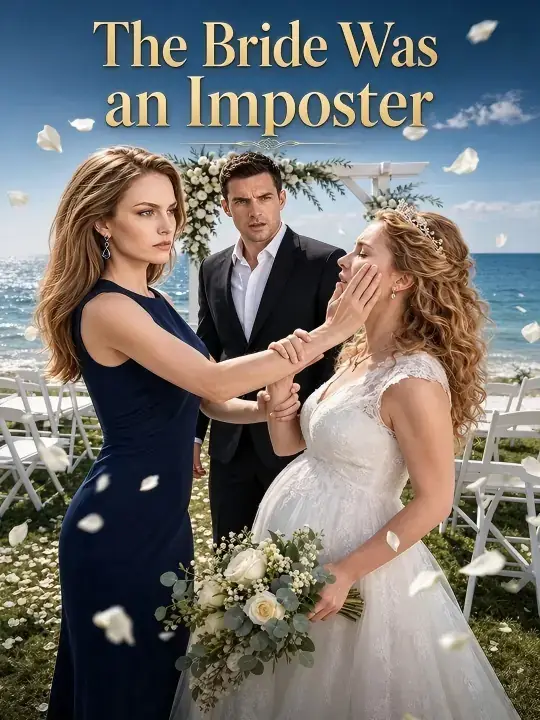
The Bride Was an Imposter opens with one of the most instantly gripping wedding scenes in short drama: Ivy, attending her best friend Grace’s wedding, slaps the bride three times over what appears to be a simple floral detail. To the guests, it looks like a shocking interruption, the kind of public outburst that could destroy a ceremony. But Ivy is not acting out of jealousy, madness, or melodrama. She notices something everyone else has missed: the bouquet is made of real flowers, and Grace was severely allergic to flowers. That single contradiction turns a romantic celebration into a crime scene waiting to be exposed. From there, The Bride Was an Imposter becomes a tense mystery built around identity theft, betrayal, and a terrifyingly intimate form of envy. The woman standing at the altar is not Grace at all, but Tiffany, Grace’s long-lost sister. Her appearance as the bride hides an even darker truth: Tiffany murdered Grace, took her face, and faked a pregnancy in order to steal Grace’s life and husband. What makes the drama so effective is its immediate moral urgency. Ivy is not merely solving a puzzle; she is fighting to restore her friend’s stolen identity before the imposter’s performance becomes permanent.
The Wedding Bouquet Clue and the First Crack in the Imposter’s Mask
The central mystery of The Bride Was an Imposter begins with a detail that feels almost too small to matter: a bouquet. Weddings are designed to make people overlook details, especially when every object is wrapped in romance and ceremony. Yet Ivy’s closeness to Grace allows her to notice the impossible. A real flower bouquet would never be part of Grace’s wedding, because Grace’s severe allergy made such flowers dangerous. Ivy’s three slaps are therefore not only physical shocks; they are narrative alarms. Each slap breaks through another layer of the fake bride’s performance and forces the room to confront what it has been trained not to question. This is where The Bride Was an Imposter finds its sharpest hook. The drama understands that an imposter does not need to fool everyone perfectly; she only needs people to accept the surface long enough for the lie to become socially protected. Tiffany’s disguise is especially cruel because she does not simply wear Grace’s place at the altar. She weaponizes the emotional trust surrounding marriage, pregnancy, and family reunion. Her fake pregnancy makes others hesitate, softening suspicion through sympathy. Her status as Grace’s lost sister adds another layer of horror, because the betrayal comes from someone who should have shared blood, memory, and protection. Instead, Tiffany turns sisterhood into competition. The wedding sequence is powerful because it transforms a public ritual of love into a stage for murder’s aftermath. Ivy’s intervention gives the audience immediate stakes: if she fails, Grace’s death will be erased by the very ceremony that should have celebrated her future.
Ivy, Grace, and Tiffany: Character Study of Loyalty, Loss, and Envy
Ivy is the moral engine of The Bride Was an Imposter. She is not introduced as a detective in the traditional sense, but her knowledge of Grace gives her a kind of emotional evidence that outsiders do not possess. The truth begins not with forensic proof, but with friendship: Ivy remembers Grace’s allergy, understands her habits, and trusts her own instinct when the room pressures her to accept what she sees. That makes Ivy’s role especially compelling. She is willing to look unreasonable in public because protecting Grace matters more than preserving social decorum. In many mystery dramas, the heroine investigates from a distance. Here, Ivy’s first act is disruptive, physical, and risky. She slaps the bride because the lie is standing right in front of her, dressed as her dead best friend. Grace, though murdered before the exposure unfolds, remains emotionally present throughout The Bride Was an Imposter. Her vulnerability, her allergy, and the life stolen from her give the plot its tragic weight. She is not simply a victim used to start the story; she is the absent center around whom everyone else’s choices are judged. Tiffany, by contrast, is built around resentment. The long-lost sister detail adds psychological complexity without excusing her actions. Her jealousy is not ordinary envy but a desire to replace Grace completely: her face, her marriage, her future, and even the sympathy attached to pregnancy. The unnamed husband also becomes part of the moral tension. He is the prize Tiffany tries to steal, but he is also a person deceived by a performance of intimacy. The drama’s strongest character conflict lies between Ivy’s loyal memory and Tiffany’s manufactured identity.
The Moral Horror of Stealing a Face, a Marriage, and a Future
The darkest question in The Bride Was an Imposter is not only how Tiffany deceived everyone, but why her deception feels so violating. Murder is already horrifying, but Tiffany’s crime goes beyond ending Grace’s life. She attempts to overwrite it. By taking Grace’s face and appearing as the bride, Tiffany turns identity into a possession that can be stolen, worn, and performed. The fake pregnancy deepens the manipulation because it exploits one of society’s most protective instincts. People are often reluctant to challenge a pregnant woman, especially at a wedding, where emotions are already arranged around blessing, family, and new beginnings. Tiffany understands that pity can become camouflage. This creates a moral dilemma for everyone around her: when sympathy and suspicion collide, which one should be trusted? Ivy’s answer is clear, but the drama makes the audience feel the pressure of the opposite response. A public accusation at a wedding seems cruel if the bride is innocent. Yet silence would allow Grace’s murder to be sealed beneath applause and vows. The Bride Was an Imposter uses that tension to explore how evil can hide behind sacred social roles. Bride, sister, expectant mother—each title carries emotional authority. Tiffany abuses all three. Her jealousy is therefore not just personal rivalry; it is a total rejection of Grace’s right to exist as herself. Ivy’s exposure of the imposter becomes an act of justice for the dead and a refusal to let appearances define truth. The moral power of the story comes from that refusal.
Ending Explained: How One Impossible Detail Reveals the Whole Crime
As a short-form mystery thriller, The Bride Was an Imposter relies on immediacy, contrast, and visual contradiction. The wedding setting is crucial because it gives the drama a bright, ceremonial surface against which the crime appears even more grotesque. A bride should symbolize promise; here, the bride is evidence of murder. A bouquet should symbolize romance; here, it becomes the clue that reveals a dead woman has been replaced. This use of familiar wedding imagery makes the plot easy to grasp while giving each detail symbolic weight. The three slaps also work like a cinematic punctuation mark. They stop the ceremony, silence the room, and announce that the story will not unfold politely. Instead of slowly guiding viewers into suspicion, The Bride Was an Imposter throws them directly into confrontation, then invites them to understand Ivy’s reasoning. The ending’s central revelation—that Tiffany is Grace’s lost sister, that she murdered Grace out of jealousy, took her face, and faked a pregnancy—reframes the entire wedding as a performance of stolen intimacy. What looked like a celebration becomes a cover-up. What looked like a friend’s outburst becomes the first act of justice. For viewers searching for a compact drama built on betrayal, identity deception, and a high-stakes public reveal, The Bride Was an Imposter delivers a premise that is both outrageous and emotionally precise. On REELFEVER, its appeal lies in the way it turns one impossible detail into a full unraveling of family envy, murder, and truth reclaimed.
Pronto a provarlo di persona? Guarda The Bride Was an Imposter in streaming ora - tutti gli episodi sono disponibili.
Guarda ora