
'%3e%3cpath%20d='M7.31055%200C11.3483%200%2014.6227%203.27289%2014.623%207.31055C14.623%209.0259%2014.0303%2010.6024%2013.041%2011.8496L15.7549%2014.5625C16.0837%2014.8913%2016.0837%2015.4241%2015.7549%2015.7529C15.4261%2016.0817%2014.8933%2016.0817%2014.5645%2015.7529L11.8516%2013.0391C10.604%2014.0293%209.02689%2014.623%207.31055%2014.623C3.27289%2014.6227%200%2011.3483%200%207.31055C0.000300342%203.27308%203.27308%200.000300342%207.31055%200ZM7.31055%201.68359C4.20324%201.68389%201.68389%204.20324%201.68359%207.31055C1.68359%2010.4181%204.20305%2012.9372%207.31055%2012.9375C10.4183%2012.9375%2012.9375%2010.4183%2012.9375%207.31055C12.9372%204.20305%2010.4181%201.68359%207.31055%201.68359Z'%20fill='%23D9D9D9'/%3e%3c/g%3e%3cdefs%3e%3cclipPath%20id='clip0_0_2110'%3e%3crect%20width='16'%20height='16'%20fill='white'/%3e%3c/clipPath%3e%3c/defs%3e%3c/svg%3e)

'%3e%3ccircle%20cx='8'%20cy='8'%20r='8'%20fill='%23313131'/%3e%3cpath%20d='M7.59985%203.19995C8.04162%203.19995%208.39955%203.55802%208.39966%203.99976V8.34253L10.7844%209.71948C11.167%209.94041%2011.2973%2010.4306%2011.0764%2010.8132C10.8554%2011.1954%2010.3661%2011.326%209.98364%2011.1052L7.21313%209.50562C7.14844%209.46826%207.09109%209.42271%207.04126%209.37183C7.03714%209.3678%207.03357%209.36324%207.02954%209.35913C7.00625%209.33429%206.98478%209.30827%206.96509%209.28101C6.86323%209.14677%206.80005%208.98107%206.80005%208.79956V3.99976C6.80015%203.55808%207.15818%203.20006%207.59985%203.19995Z'%20fill='white'%20fill-opacity='0.7'/%3e%3c/g%3e%3cdefs%3e%3cclipPath%20id='clip0_3_1208'%3e%3crect%20width='16'%20height='16'%20fill='white'/%3e%3c/clipPath%3e%3c/defs%3e%3c/svg%3e)
'%3e%3cmask%20id='mask0_108_4890'%20style='mask-type:luminance'%20maskUnits='userSpaceOnUse'%20x='0'%20y='0'%20width='108'%20height='108'%3e%3ccircle%20cx='54'%20cy='54'%20r='54'%20fill='white'/%3e%3c/mask%3e%3cg%20mask='url(%23mask0_108_4890)'%3e%3ccircle%20cx='54'%20cy='54'%20r='54'%20fill='%231A1A1A'/%3e%3cpath%20d='M54%2069C77.196%2069%2096%2087.804%2096%20111C96%20134.196%2077.196%20153%2054%20153C30.804%20153%2012%20134.196%2012%20111C12%2087.804%2030.804%2069%2054%2069ZM54%2018C65.598%2018%2075%2027.402%2075%2039C75%2050.598%2065.598%2060%2054%2060C42.402%2060%2033%2050.598%2033%2039C33%2027.402%2042.402%2018%2054%2018Z'%20fill='%23313131'/%3e%3ccircle%20cx='54'%20cy='54'%20r='53.25'%20stroke='%23323232'%20stroke-width='1.5'/%3e%3c/g%3e%3c/g%3e%3cdefs%3e%3cclipPath%20id='clip0_108_4890'%3e%3crect%20width='54'%20height='54'%20fill='white'%20transform='scale(2)'/%3e%3c/clipPath%3e%3c/defs%3e%3c/svg%3e)


Overview of His Midnight Prey
His Midnight Prey opens with an image that feels intimate, terrifying, and impossible to dismiss: Maeve, a profiler trained to read the darkest patterns of human behavior, is haunted by recurring nightmares of a masked monster feeding on her blood. The premise immediately blurs the border between crime thriller and psychological horror. Maeve is not simply chasing danger from a safe professional distance; danger has already entered her sleep, her body, and her sense of reality. When she wakes with real bite marks, the case becomes more than a mystery. It becomes a question of whether the mind can predict violence before the evidence appears, or whether something far more predatory is stalking her from the shadows.
The drama intensifies when a string of desiccated body cases forces Maeve to work with Dr. Darius, a man whose immaculate presence only makes him more unsettling. He is gorgeous, controlled, and disturbingly familiar. His touch and gaze mirror the beast from Maeve’s dreams, turning every professional interaction into a silent confrontation. His Midnight Prey builds suspense not by revealing too much, but by making the viewer share Maeve’s uncertainty. Is Dr. Darius a savior, a suspect, or the monster wearing a human face? As Maeve uses her own body as bait, the story becomes a dangerous study of fear, attraction, and the cost of stepping willingly into a lethal trap.
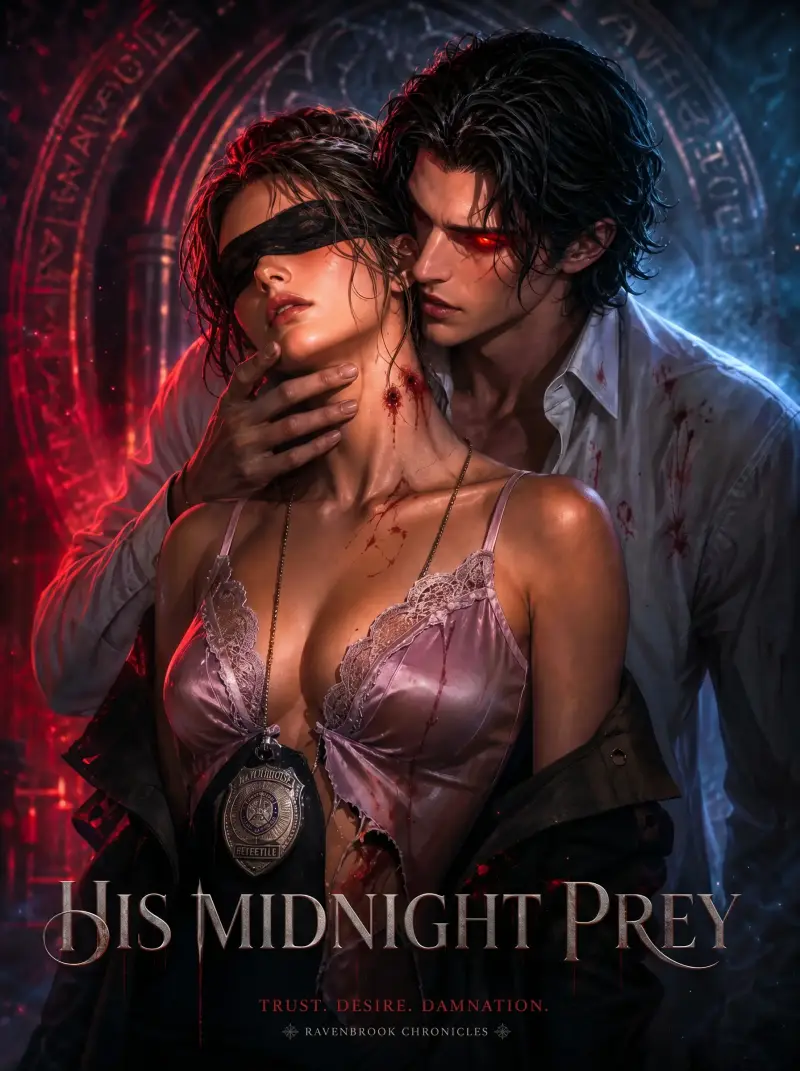
Maeve as Profiler and Prey: Character Study in His Midnight Prey
At the center of His Midnight Prey is Maeve, a profiler whose profession depends on discipline, observation, and emotional distance. She is trained to identify motives, predict behavior, and connect evidence that others might overlook. That is what makes her situation so compelling: the threat she faces is not only external but deeply personal. Her nightmares are not vague symbols or ordinary fears. They are vivid encounters with a masked monster feeding on her blood, and the physical bite marks she discovers afterward destroy the comfort of rational explanation. For a character who likely relies on logic, the body becoming evidence of the impossible is a devastating reversal.
Maeve’s strength lies in the fact that she does not retreat from the mystery, even when it appears to violate the rules of the world she understands. Instead, she investigates herself as much as the cases around her. Her fear is real, but it sharpens rather than paralyzes her. His Midnight Prey uses Maeve’s vulnerability not to weaken her but to raise the stakes of her courage. She is not a passive victim waiting to be saved. By choosing to use her body as bait, she turns the predator’s attention into a weapon she can aim back at him.
This decision also reveals Maeve’s most dangerous flaw: she is willing to cross personal boundaries to solve the truth. In many crime stories, the profiler stands outside the violence, interpreting it after the fact. In His Midnight Prey, Maeve steps inside the pattern. That makes her both investigator and target, analyst and evidence. The tension comes from watching someone brilliant understand the danger and still move closer, because the only way to expose the trap may be to enter it.
Dr. Darius and the Masked Monster: Suspicion, Attraction, and Control
Dr. Darius is introduced through contradiction. He is immaculate, a word that suggests precision, beauty, cleanliness, and control. Yet he appears in connection with desiccated bodies, bite marks, and Maeve’s dreams of blood. His presence carries the unsettling elegance often found in the most memorable thriller figures: the more composed he seems, the more viewers are invited to suspect what might be hidden beneath that polished surface. His Midnight Prey understands the dramatic power of a character who does not need to threaten loudly. A gaze, a touch, or a perfectly calm response can feel more dangerous than an open confession.
Maeve’s reaction to Darius is especially important. She freezes because he does not merely resemble a generic suspect; he echoes the beast from her nightmares. That recognition turns their partnership into a psychological battlefield. Every scene between them can be read in two directions. On one level, they are paired by a case and must work together. On another, Maeve is studying him for signs that he is the monster who has already invaded her dreams. The drama’s central tension depends on this unstable intimacy. If Darius is innocent, Maeve’s fear may be leading her into paranoia. If he is guilty, then his nearness is a form of control.
The most interesting possibility in His Midnight Prey is that Darius functions as both mirror and mystery. He reflects Maeve’s nightmares back at her, forcing her to confront what she knows, what she senses, and what she cannot prove. His beauty complicates the threat because attraction can blur judgment, especially when danger arrives in a form that is impossible to ignore. The title itself suggests a predator-prey dynamic, but Darius’s role keeps that dynamic uncertain. Is he the hunter, the bait, or the key to a larger pattern behind the desiccated bodies? That uncertainty gives the character his narrative power.
Nightmares, Bite Marks, and Desiccated Bodies: Key Mystery Elements Explained
The most chilling element of His Midnight Prey is the connection between Maeve’s nightmares and the real-world crime scenes. A masked monster feeding on blood might first appear to belong to the language of horror, but the string of desiccated body cases anchors the story in investigative suspense. The victims are not simply dead; they are drained, emptied, and transformed into evidence of a ritualistic or predatory pattern. That detail matters because it makes the crimes feel intimate and invasive. The body is not only killed but consumed, which turns the investigation into a search for a predator who treats people as sustenance.
Maeve’s bite marks are the key turning point because they collapse the distinction between dream and case file. Before that moment, the nightmares could be interpreted as trauma, intuition, or psychological projection. After the marks appear, Maeve can no longer separate what happens in sleep from what happens in reality. His Midnight Prey uses this collapse to create a haunting investigative structure. The clues are not only on the victims; they are on Maeve. Her own body becomes the crime scene she must read.
This is also where the drama’s moral pressure deepens. If Maeve suspects that Darius is linked to the monster, how much evidence does she need before she acts? If her own experiences are dismissed as impossible, how can she convince others that the danger is real? The series builds a strong sense of isolation around her expertise. She may be the person most qualified to understand a predator’s pattern, yet she is also the person whose judgment is most compromised by fear, physical evidence, and unwanted attraction. In His Midnight Prey, the case is not a puzzle solved from afar. It is a trap closing around the investigator, one clue at a time.
Using the Body as Bait: Moral Dilemma and Ending Meaning in His Midnight Prey
Maeve’s choice to use her body as bait gives His Midnight Prey its sharpest moral dilemma. It is a brave act, but not a simple heroic gesture. By stepping into Darius’s possible trap, she accepts the risk that the predator may be stronger, more prepared, or more intimate with her fears than she realizes. The decision raises uncomfortable questions about self-sacrifice in crime stories. How much should an investigator endanger herself to stop a killer? When the victim and detective become the same person, does courage become strategy, obsession, or desperation?
The phrase lethal trap suggests that Maeve is not walking into uncertainty by accident. She knows she is being drawn in, and she chooses to continue. This makes the suspense in His Midnight Prey more psychological than procedural. The audience is not only asking who the monster is; they are asking whether Maeve can maintain control while pretending to surrender it. Bait always carries a cruel paradox. It has power because it attracts the hunter, but it is also exposed, vulnerable, and meant to be taken. Maeve’s plan therefore becomes a test of identity: can she remain the profiler when the predator sees her as prey?
The ending possibilities implied by His Midnight Prey depend on how the drama resolves its central ambiguity. If the monster is human, the story becomes a dark portrait of manipulation, violence, and obsession hidden behind beauty and professionalism. If the nightmare has a more supernatural truth, then Maeve’s investigation becomes a confrontation with forces beyond ordinary criminal psychology. Either way, the emotional answer matters as much as the plot answer. Maeve must reclaim ownership of her body, her fear, and her ability to trust her own perception. That is why His Midnight Prey lingers: it turns a mystery into a battle for self-possession.
직접 경험해 볼 준비가 되셨나요? 지금 His Midnight Prey를 스트리밍하세요 - 모든 에피소드를 시청하실 수 있습니다.
지금 시청하세요