
'%3e%3cpath%20d='M7.31055%200C11.3483%200%2014.6227%203.27289%2014.623%207.31055C14.623%209.0259%2014.0303%2010.6024%2013.041%2011.8496L15.7549%2014.5625C16.0837%2014.8913%2016.0837%2015.4241%2015.7549%2015.7529C15.4261%2016.0817%2014.8933%2016.0817%2014.5645%2015.7529L11.8516%2013.0391C10.604%2014.0293%209.02689%2014.623%207.31055%2014.623C3.27289%2014.6227%200%2011.3483%200%207.31055C0.000300342%203.27308%203.27308%200.000300342%207.31055%200ZM7.31055%201.68359C4.20324%201.68389%201.68389%204.20324%201.68359%207.31055C1.68359%2010.4181%204.20305%2012.9372%207.31055%2012.9375C10.4183%2012.9375%2012.9375%2010.4183%2012.9375%207.31055C12.9372%204.20305%2010.4181%201.68359%207.31055%201.68359Z'%20fill='%23D9D9D9'/%3e%3c/g%3e%3cdefs%3e%3cclipPath%20id='clip0_0_2110'%3e%3crect%20width='16'%20height='16'%20fill='white'/%3e%3c/clipPath%3e%3c/defs%3e%3c/svg%3e)

'%3e%3ccircle%20cx='8'%20cy='8'%20r='8'%20fill='%23313131'/%3e%3cpath%20d='M7.59985%203.19995C8.04162%203.19995%208.39955%203.55802%208.39966%203.99976V8.34253L10.7844%209.71948C11.167%209.94041%2011.2973%2010.4306%2011.0764%2010.8132C10.8554%2011.1954%2010.3661%2011.326%209.98364%2011.1052L7.21313%209.50562C7.14844%209.46826%207.09109%209.42271%207.04126%209.37183C7.03714%209.3678%207.03357%209.36324%207.02954%209.35913C7.00625%209.33429%206.98478%209.30827%206.96509%209.28101C6.86323%209.14677%206.80005%208.98107%206.80005%208.79956V3.99976C6.80015%203.55808%207.15818%203.20006%207.59985%203.19995Z'%20fill='white'%20fill-opacity='0.7'/%3e%3c/g%3e%3cdefs%3e%3cclipPath%20id='clip0_3_1208'%3e%3crect%20width='16'%20height='16'%20fill='white'/%3e%3c/clipPath%3e%3c/defs%3e%3c/svg%3e)
'%3e%3cmask%20id='mask0_108_4890'%20style='mask-type:luminance'%20maskUnits='userSpaceOnUse'%20x='0'%20y='0'%20width='108'%20height='108'%3e%3ccircle%20cx='54'%20cy='54'%20r='54'%20fill='white'/%3e%3c/mask%3e%3cg%20mask='url(%23mask0_108_4890)'%3e%3ccircle%20cx='54'%20cy='54'%20r='54'%20fill='%231A1A1A'/%3e%3cpath%20d='M54%2069C77.196%2069%2096%2087.804%2096%20111C96%20134.196%2077.196%20153%2054%20153C30.804%20153%2012%20134.196%2012%20111C12%2087.804%2030.804%2069%2054%2069ZM54%2018C65.598%2018%2075%2027.402%2075%2039C75%2050.598%2065.598%2060%2054%2060C42.402%2060%2033%2050.598%2033%2039C33%2027.402%2042.402%2018%2054%2018Z'%20fill='%23313131'/%3e%3ccircle%20cx='54'%20cy='54'%20r='53.25'%20stroke='%23323232'%20stroke-width='1.5'/%3e%3c/g%3e%3c/g%3e%3cdefs%3e%3cclipPath%20id='clip0_108_4890'%3e%3crect%20width='54'%20height='54'%20fill='white'%20transform='scale(2)'/%3e%3c/clipPath%3e%3c/defs%3e%3c/svg%3e)


Overview of The Dragon’s Ruin
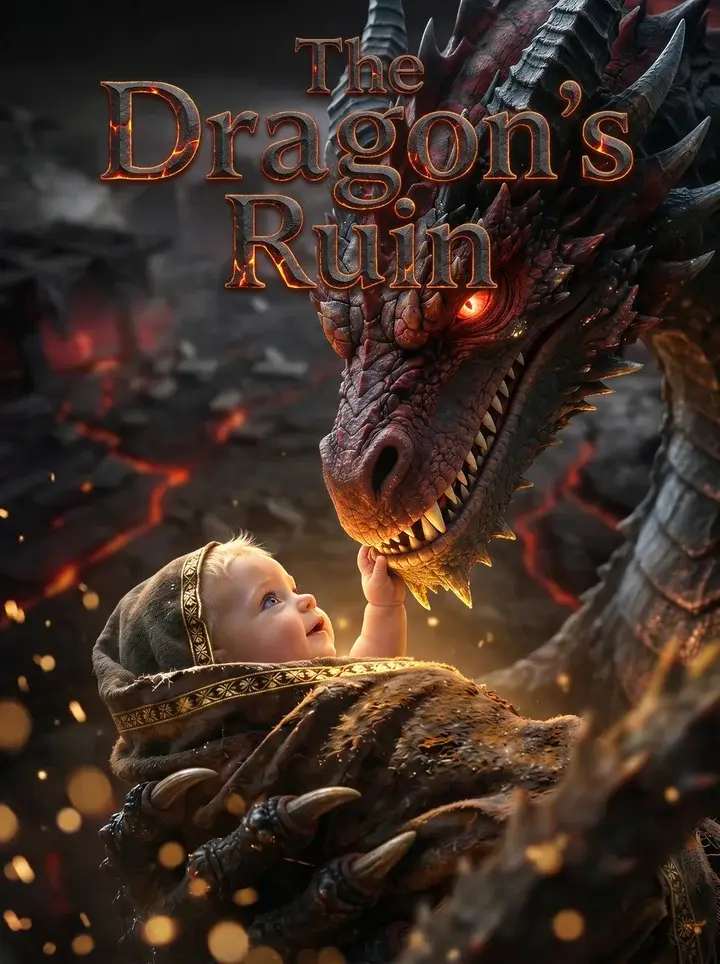
The Dragon’s Ruin is a fantasy short drama built around one striking contradiction: a being known as the Harbinger of Extinction becomes the guardian of a helpless mortal child. Sakas is introduced not as a misunderstood creature, but as a monster whose name already carries the weight of endings. He represents disaster, fear, and ancient power. Yet the story changes course when an infant named Nina clutches his Inverse Scale, triggering an ancient Covenant that binds him to her protection. From that moment, The Dragon’s Ruin shifts from a tale of destruction into a story about reluctant duty, sacrifice, and the strange forms redemption can take.
What makes The Dragon’s Ruin especially compelling is the emotional severity of its premise. Sakas does not simply choose kindness overnight. He is forced into guardianship by a magical bond, hunted by a Dragon Slayer, and pushed into increasingly painful decisions as he tries to keep Nina alive. The search for Nina’s mother gives the drama a human goal, but the larger journey belongs to Sakas, whose body and identity are gradually dismantled by the act of protecting someone he was never meant to love. By the time he tears his wings from his spine and ultimately becomes a mountain to shelter her village forever, The Dragon’s Ruin has transformed into a mythic fable about what it costs to defy one’s nature.
Sakas and Nina: Character Study of a Monster Bound to Innocence
At the center of The Dragon’s Ruin is Sakas, a character defined by titles before he is defined by emotion. Being called the Harbinger of Extinction immediately places him outside ordinary morality. He is not merely dangerous; he is associated with finality itself. This makes Nina’s arrival more than a plot device. Her small, unconscious gesture of clutching his Inverse Scale becomes the one action powerful enough to interrupt a force of annihilation. The ancient Covenant does not erase Sakas’s nature, but it redirects it. His power, once feared as a weapon, becomes a shield.
The drama’s most interesting character tension lies in the difference between compulsion and transformation. Sakas first protects Nina because the Covenant demands it. He becomes her guardian because ancient law leaves him no alternative. Yet The Dragon’s Ruin does not treat obligation as the same thing as redemption. Instead, it explores how repeated acts of protection can carve a new identity into someone who once existed only as a destroyer. Every danger he intercepts, every wound he absorbs, and every step he takes toward finding Nina’s mother complicates the image of the monster.
Nina, though an infant, functions as the moral center of The Dragon’s Ruin. She does not persuade Sakas with speeches or judge him for his past. Her vulnerability is her power. Because she cannot survive without protection, she exposes the deepest question in Sakas’s character: is he capable of serving life rather than ending it? The answer develops slowly, through action rather than confession. His guardianship becomes a form of penance, but also something more intimate. In protecting Nina, Sakas begins to discover a purpose that is not rooted in fear.
The Inverse Scale and the Covenant: Theme Exploration in The Dragon’s Ruin
The Inverse Scale is one of the most important symbols in The Dragon’s Ruin because it turns the dragon’s body into the doorway of fate. In many dragon legends, a scale can represent pride, invulnerability, or a secret weakness. Here, Nina’s grasp on the Inverse Scale activates an ancient Covenant, suggesting that the most guarded part of Sakas is also the part capable of binding him to another life. The moment is simple in action but enormous in meaning: an infant touches what should be untouchable, and a creature of extinction is forced into responsibility.
This Covenant gives The Dragon’s Ruin its central moral complication. If Sakas is magically compelled to protect Nina, can his sacrifice still be meaningful? The drama’s answer appears to be yes, but not immediately. At first, the bond functions like a law imposed from outside the self. It halts Sakas and redirects his violence. Over time, however, the Covenant becomes less important than what Sakas chooses to do within its limits. He could protect Nina with resentment, minimum effort, or cold efficiency. Instead, his actions become more extreme and more personal, especially as the search for her mother grows urgent.
The Dragon Slayer adds pressure to this symbolic conflict. To the Dragon Slayer, Sakas may remain nothing more than a monster who must be hunted. That perspective is understandable within the world of The Dragon’s Ruin, because a dragon known as the Harbinger of Extinction would naturally inspire terror. Yet the pursuit also raises a painful question: can justice recognize change when change wears the face of an old enemy? Sakas’s protection of Nina does not erase what he is, but it forces the audience to see him as more than a target. The Covenant begins as a chain, but it becomes a mirror, reflecting the possibility that even ruin can be redirected toward shelter.
The Wing-Tearing Sacrifice: Key Turning Point in The Dragon’s Ruin
The most devastating turning point in The Dragon’s Ruin comes when Sakas tears his wings from his spine to find Nina’s mother. In fantasy storytelling, wings often symbolize freedom, dominion, and the natural majesty of a dragon. For Sakas, they are likely tied to everything that makes him terrifying and untouchable. To rip them away is not just to suffer pain; it is to surrender a fundamental part of himself. The act marks the moment when his guardianship moves beyond obligation and becomes self-destruction in service of another.
This scene matters because it changes the scale of sacrifice in The Dragon’s Ruin. Earlier, Sakas acts as a living shield, placing his body between Nina and danger. That already carries emotional weight, especially for a creature once associated with death. But losing his wings suggests a deeper transformation: he is no longer merely protecting Nina from immediate threats, but actively mutilating his own identity to give her a chance at reunion, family, and belonging. The search for Nina’s mother becomes more than a mission. It becomes proof that Sakas now understands Nina as a person with a future, not simply as a life he is bound to preserve.
The Dragon Slayer’s hunt intensifies the significance of this turning point. A wingless dragon is more vulnerable, more grounded, and perhaps more visibly mortal. By accepting that vulnerability, Sakas defies the very image of invincible monstrosity. The Dragon’s Ruin uses this bodily sacrifice to make redemption physical. Sakas does not simply regret, promise, or change his attitude. He pays in flesh, movement, and power. His fading afterward makes the sacrifice irreversible, and that irreversibility gives the drama its tragic grandeur. The scene tells viewers that protection, in its purest and most painful form, can mean giving up the parts of oneself that once seemed essential.
The Mountain That Remains: Ending Explained in The Dragon’s Ruin
The ending of The Dragon’s Ruin completes Sakas’s transformation through one of fantasy drama’s most poetic images: as he fades, he becomes a mountain that shelters Nina’s village forever. This final metamorphosis is powerful because it does not reward him with a simple rescue, a restored body, or a peaceful escape. Instead, his redemption becomes landscape. A dragon once feared as the Harbinger of Extinction is remade into a permanent form of protection, watching over human life without needing praise, movement, or even a voice.
The mountain ending also deepens the drama’s moral vision. The Dragon’s Ruin does not suggest that one noble act can neatly cancel a legacy of terror. Sakas does not become harmless in the ordinary sense; he becomes something immense, silent, and enduring. His final form preserves the scale of what he was while changing its purpose completely. The same vastness that might once have threatened the world now shelters a village. In that sense, The Dragon’s Ruin is not only about redemption, but about the redirection of power. The story asks whether destructive strength can be transformed into a foundation for life.
For Nina, the ending carries a different emotional meaning. She begins the story as an infant whose hand unknowingly changes fate. By the end, the protection surrounding her is no longer temporary. Sakas’s sacrifice becomes part of the world she will grow up in, a silent inheritance from the monster who became her guardian. The image of the mountain gives The Dragon’s Ruin the feeling of an origin myth, as if the landscape itself remembers an act of impossible devotion.
This is why The Dragon’s Ruin resonates beyond its fantasy premise. It combines dragon lore, pursuit, sacrifice, and mythic transformation into a story about responsibility born from contact with innocence. Sakas may begin as ruin, but his final legacy is shelter. That reversal gives the drama its emotional force and makes its ending linger long after the last scene.
직접 경험해 볼 준비가 되셨나요? 지금 The Dragon’s Ruin를 스트리밍하세요 - 모든 에피소드를 시청하실 수 있습니다.
지금 시청하세요